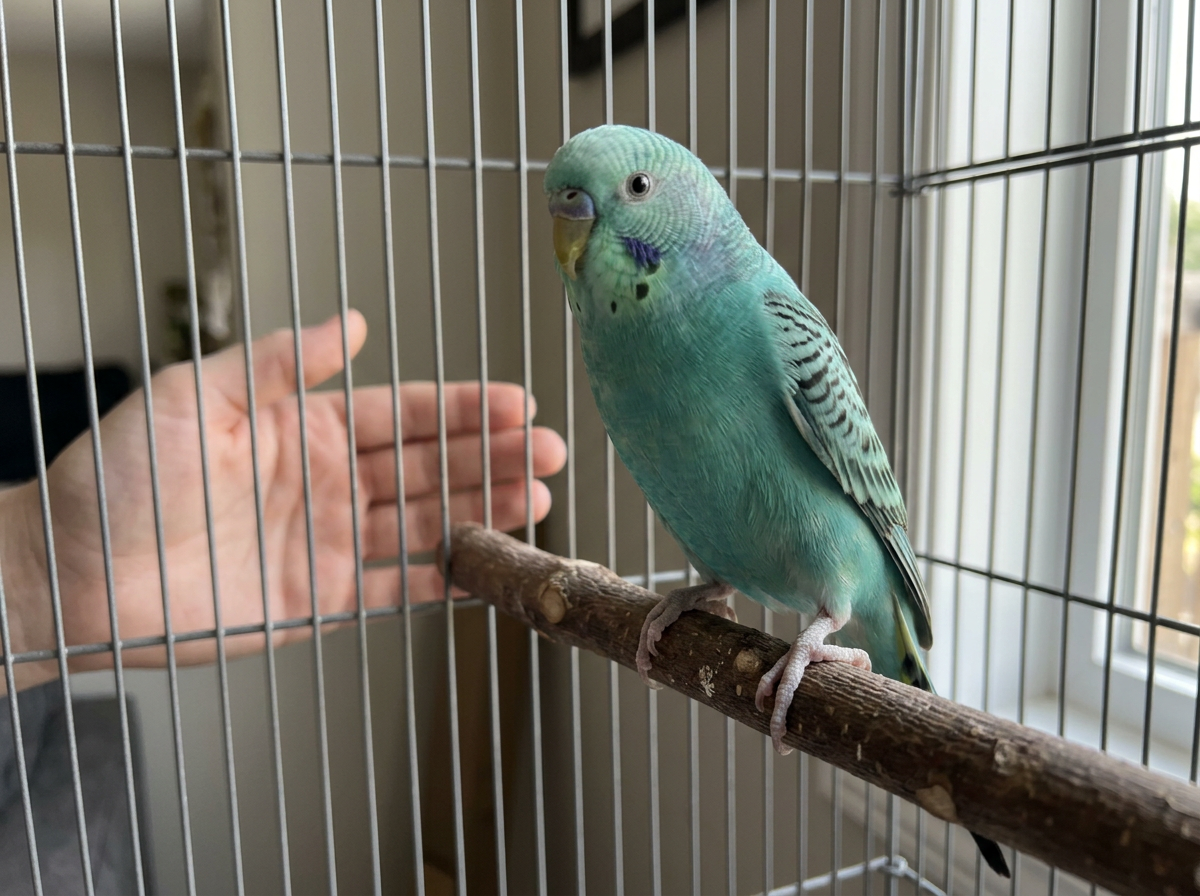
If your bird is scratching more than usual, losing feathers, or just seems off, lice are one of the first things worth checking. Bird lice are small, flat, wingless insects that live on the feathers and skin of birds. They are visible to the naked eye if you know where to look, and their eggs (called nits) are even easier to spot once you know what you are searching for. The good news is that with a careful inspection, you can often tell fairly quickly whether lice are the problem, or whether something else is going on.
Bird Lice Symptoms: Signs, Mistakes, and What to Do

Marcus Webb
23 Mar 2026
How to tell bird lice apart from mites and other pests
The biggest source of confusion when dealing with feather and skin problems in birds is mistaking lice for mites, or vice versa. They are both common external parasites, but they look different, live in different places, and cause slightly different problems. Getting this distinction right matters because treatment approaches differ between the two.
Lice are chewing insects. They feed on feather material, skin debris, and sometimes blood, and they spend their entire life cycle on the bird. You will almost never find lice crawling around the cage or on perches because they rarely leave the host. Mites, by contrast, are arachnids (closer to spiders) and many species do leave the bird to hide in cracks and crevices in the environment, especially at night. If you are finding tiny moving specks on cage surfaces or on yourself after handling the bird, that points more toward mites than lice.
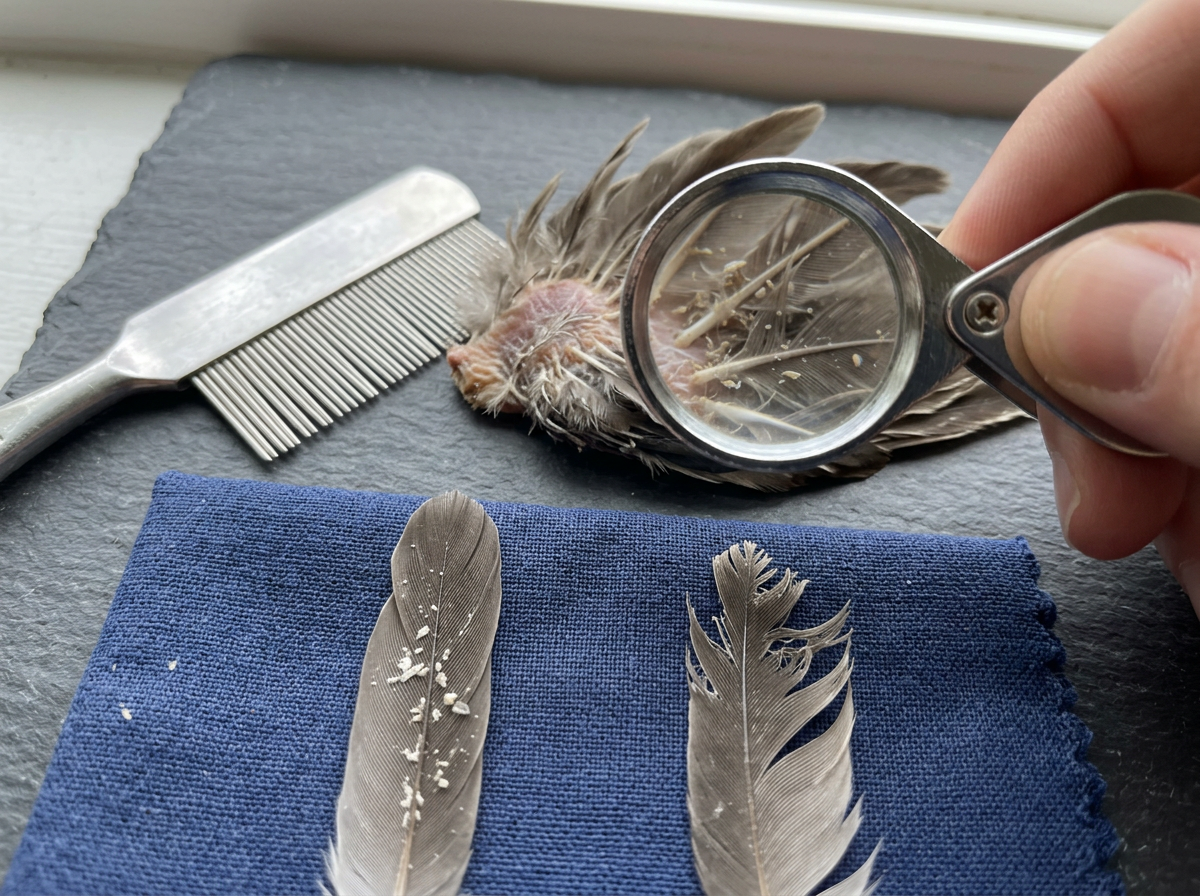
The most reliable visual clue for lice is their eggs. Nits appear as small white oval clusters attached firmly to feather shafts. They do not brush off easily like dust or dander. Adult lice are also visible, appearing as flat, elongated insects moving through the feathers. Mite infestations, when visible, tend to look different: some mite species cause thickened, crusty lesions around the beak, legs, or feet (a condition called knemidocoptiasis), while others leave no obvious skin marks but cause intense itching and anemia. The location of the problem matters. Crusty scaling around the beak or on the legs in a budgerigar or parakeet suggests mites, not lice. White eggs stuck to feather shafts suggest lice.
| Feature | Lice | Mites |
|---|---|---|
| Type of organism | Wingless insects | Arachnids |
| Where they live | On the bird at all times | On bird and/or in environment |
| Visible eggs (nits) | Yes, white, attached to feather shafts | Rarely visible eggs on bird |
| Skin lesions | Feather damage, irritated skin | Crusty/thickened beak, legs, feet (some species) |
| Found in cage/environment | Rarely | Frequently (many species) |
| Primary damage | Feather chewing, skin irritation, possible blood loss | Blood loss, skin thickening, anemia |
| Most affected birds | Backyard poultry, outdoor/wild birds | All birds including pet parrots |
It is worth knowing that lice infestations are more commonly reported in backyard poultry, peafowl, and outdoor birds than in indoor pet parrots. That does not mean pet birds never get lice, but if you have an indoor parrot with no contact with other birds, mites or a non-parasitic cause like feather destructive behavior or nutritional deficiency may be more likely.
Common bird lice symptoms to watch for
Most bird owners first notice something is wrong before they ever spot an actual louse. The behavioral and physical symptoms tend to show up early and are worth taking seriously.
- Excessive scratching, especially around the head, neck, and vent area
- Frequent preening that seems frantic or obsessive rather than normal grooming
- Restlessness, particularly at night
- Visible white or pale eggs (nits) clustered along feather shafts
- Adult lice visible when you part the feathers, especially near the base of the feathers and on the skin
- Feather damage including broken shafts, ragged edges, or missing feathers
- Skin irritation or redness under the feathers
- Weight loss or reduced appetite in moderate to heavy infestations
- Weakness or lethargy, particularly in young birds, which can indicate blood loss
The nits are your most reliable early indicator, and these flying bird hand symptoms can often be spotted before you ever see the lice. They are white, attached to individual feather shafts, and visible without magnification if you part the feathers and look closely, particularly around the vent, under the wings, and on the back of the neck where birds cannot preen as easily.
Skin and feather changes to look for, and what the behavior tells you
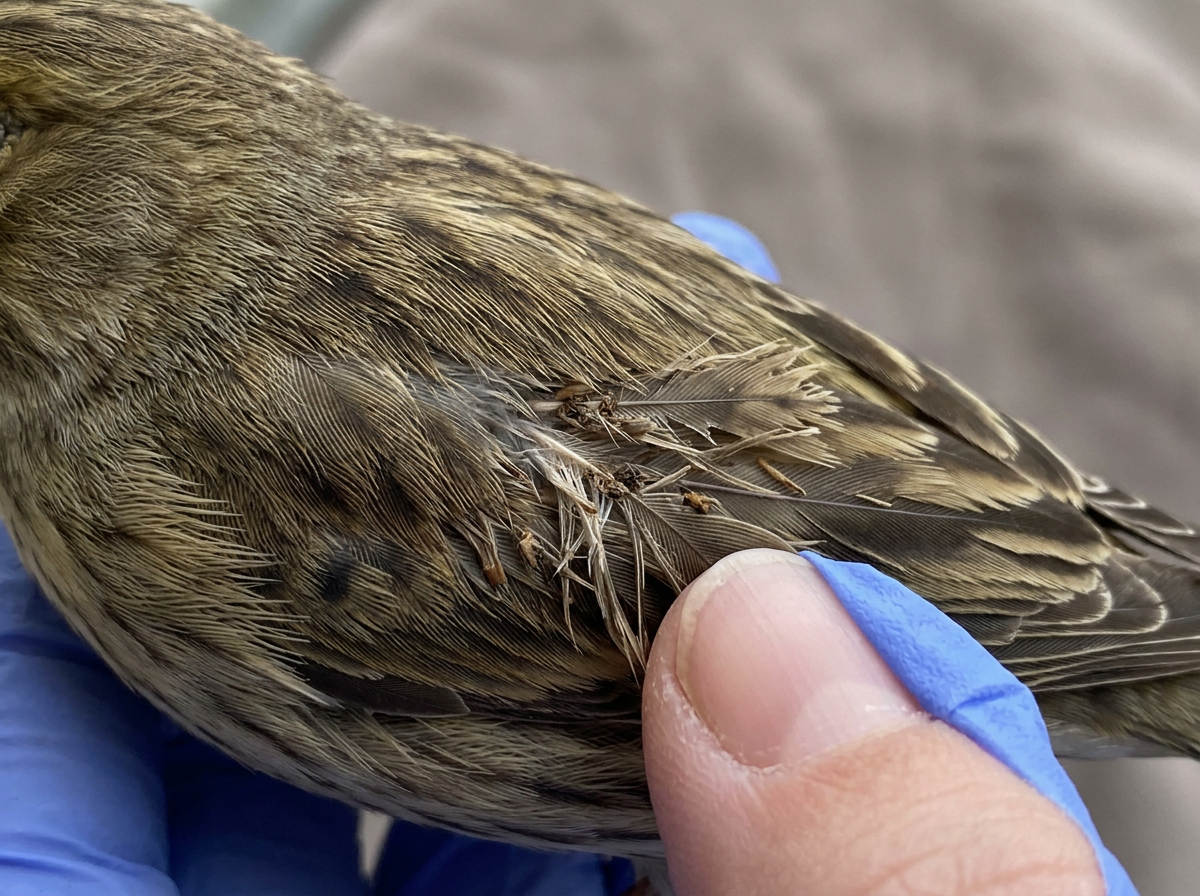
Feather condition is one of the clearest windows into what is happening with a bird's skin health. With lice, you will typically see feather damage that looks mechanical: frayed barbs, broken shafts, and patchy feather loss in areas the bird cannot easily reach itself. Chewing lice (the most common type in birds) feed on feather material directly, which is why the feather damage is often the first thing you notice.
Skin changes include redness, flaking, or small inflamed spots where lice have been feeding. In heavy infestations, the skin may look raw or irritated in patches. Unlike mite-related skin changes, which can cause distinctive crusty or thickened lesions around the beak or feet, lice-related skin irritation tends to be more diffuse and located where feather cover is dense.
Behavior is just as telling as physical signs. A bird that was previously calm and is now constantly scratching, biting at its feathers, or rubbing against cage bars is telling you something is wrong. Restlessness at night is a common sign, since parasites tend to be more active in the dark. If your bird is also less interested in food, is fluffed up, or seems generally low energy, the infestation may already be moderate to heavy.
One thing to keep in mind: feather damage and over-preening can also be caused by stress, boredom, nutritional deficiencies, or other illnesses. Lice are just one possibility. The presence of visible nits or moving adult lice is what confirms the diagnosis rather than feather damage alone. If you cannot find any actual parasites on the bird, it is worth looking at other causes before assuming lice.
How symptoms differ in wild birds versus pet birds
Wild birds and pet birds both get lice, but how you observe and respond to the symptoms is quite different in each situation.
Pet and captive birds
With pet birds, you have the advantage of close daily contact, which means you can spot early signs quickly. Routine handling and observation are your best tools. Lice infestations in indoor pet parrots are less common than in backyard birds, but they do happen, especially if the bird has had recent contact with other birds, has been to a bird fair, or was recently acquired from a pet store or breeder. New birds are one of the most common sources of introduction. A newly purchased bird that is scratching excessively within the first few weeks is worth examining closely.
Backyard poultry and outdoor birds
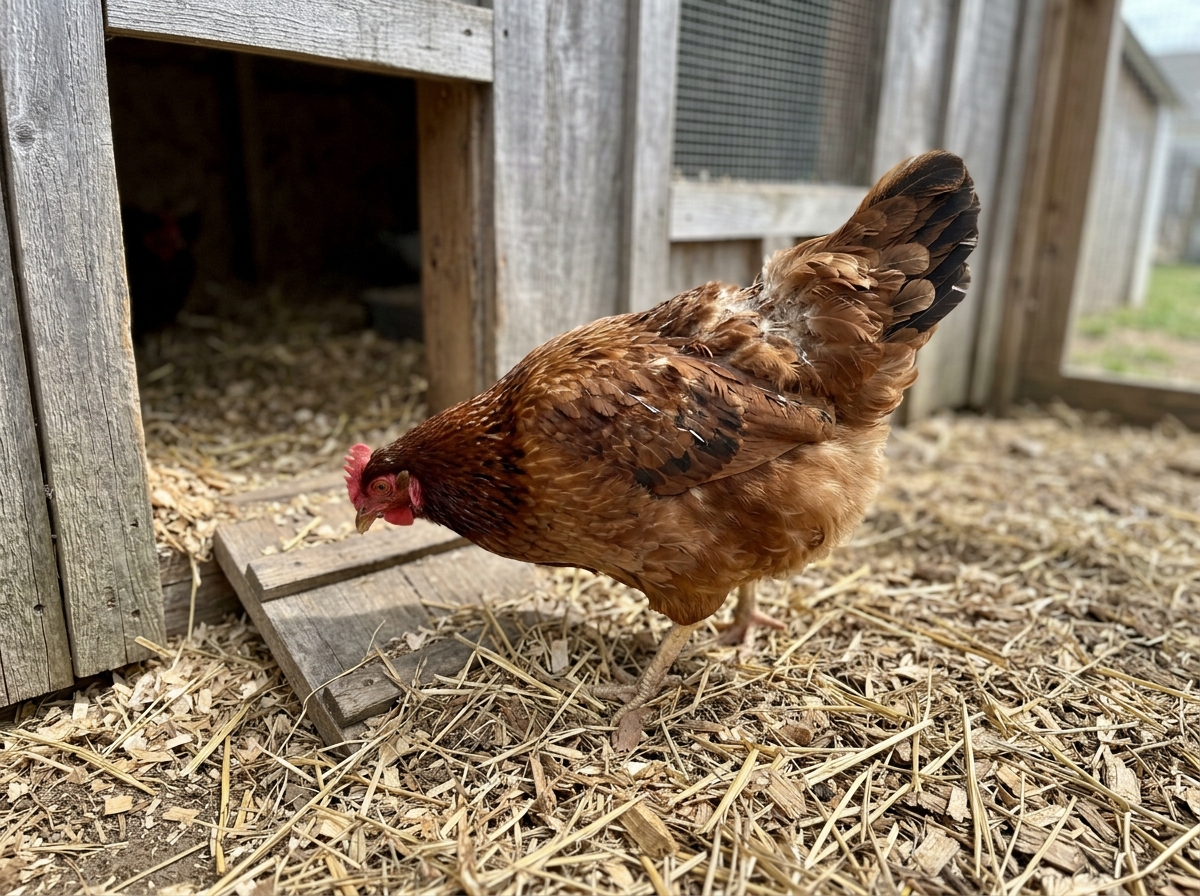
Lice are significantly more common in backyard chickens, ducks, peafowl, and other outdoor poultry. Birds that live in groups and spend time on the ground or in shared spaces have more opportunities for louse transmission. In a flock setting, if one bird has lice, you should assume others may too. Symptoms at the flock level include reduced egg production, weight loss across multiple birds, and generally poor feather condition that seems to be spreading.
Wild birds
If you are observing wild birds (at a feeder or in a nest, for example), signs of lice are harder to assess. A wild bird that appears lethargic, has obviously damaged or patchy feathers, or is scratching frequently at a feeder may have a parasite load worth noting. In nesting situations, a heavily infested nest can cause parents to abandon eggs or chicks, as the parasite burden becomes too stressful. There is not much you can do for wild birds beyond removing and cleaning nest boxes after the season ends to reduce parasite buildup for the following year.
Red flags that mean the situation is more serious
Most lice infestations, when caught early, are manageable. But there are warning signs that tell you the infestation has progressed to a point where urgent action, including a vet visit, is needed.
- Pale comb, wattles, or mucous membranes in poultry, which may indicate anemia from blood loss
- A chick or juvenile bird that is weak, cold, or not responding normally, since young birds are especially vulnerable to anemia from lice and blood-feeding mites
- Significant weight loss over a short period of time
- Open sores, bleeding skin, or signs of secondary bacterial infection (swelling, discharge, foul smell around lesions)
- A bird that is completely lethargic and not eating or drinking
- Rapid spread of symptoms to other birds in a flock
Anemia is the most serious immediate risk with heavy lice or mite infestations. Lice that feed on blood, and especially blood-feeding mites in large numbers, can cause enough blood loss to be life-threatening, particularly in chicks, juveniles, or already-weakened birds. If a young bird is cold, limp, or pale, treat it as an emergency.
Secondary infections are another concern. When a bird has been scratching and damaging its skin for an extended period, bacteria can get into those wounds. What started as a lice problem can develop into a skin infection that needs separate treatment. If the skin under the feathers looks inflamed, wet, or has a smell, mention this to your vet.
If you are dealing with an unusual presentation where the skin lesions do not match what lice typically cause, or if the bird has respiratory symptoms, swollen joints, or other systemic signs on top of feather problems, the lice may not be the only issue. Other avian illnesses, including feather diseases like PBFD, can sometimes be confused with or occur alongside external parasite infestations, so a full workup by a vet is the right call in those cases.
What to do right now: immediate steps and getting a proper diagnosis
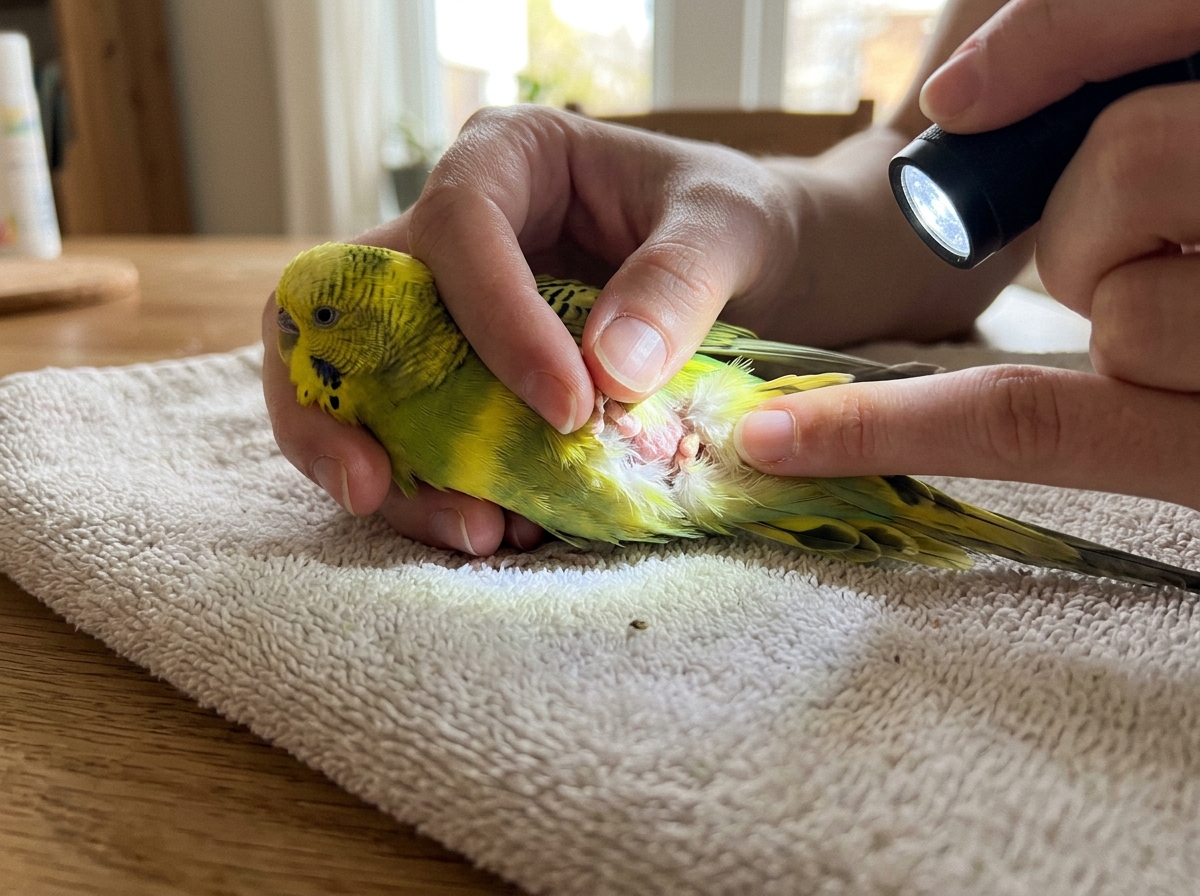
If you suspect lice, here is what to do while you arrange a vet visit or work out your next steps.
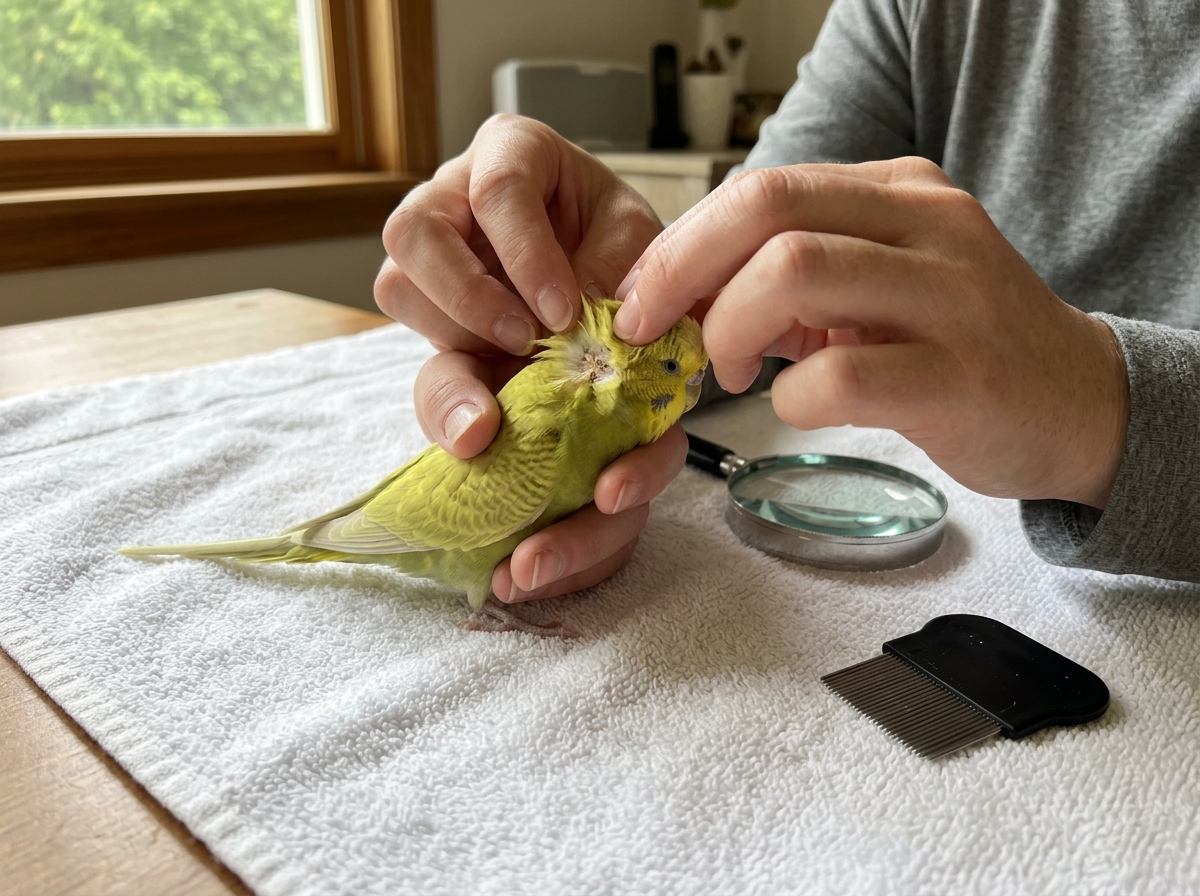
- Do a hands-on inspection. Part the feathers around the vent, under the wings, behind the neck, and along the back. Use good lighting. Look for white eggs attached to feather shafts and small, flat, moving insects. If you are not sure what you are seeing, take a photo with your phone using the macro setting.
- Isolate the affected bird from others if possible. Since lice spread through direct contact between birds, separating the sick bird reduces the chance of spreading the infestation while you work out treatment.
- Check all birds in the same environment. If one bird has lice, others nearby likely do too. Look at each one individually.
- Try the white paper test. Place the bird over a sheet of white paper and gently ruffle the feathers. Any dislodged parasites, eggs, or debris will fall onto the paper and be easier to see against the white background.
- Do not start treatment yet without knowing what you are treating. Using the wrong antiparasitic product can be ineffective and potentially harmful. Wait for a proper diagnosis if you are uncertain.
- Contact an avian vet. Explain the symptoms you have observed and ask for an appointment. If the bird is showing signs of serious illness like lethargy, weakness, or anemia, make it urgent.
At the vet, diagnosis is usually straightforward. Your vet may do a physical exam of the feathers and skin, and can confirm the presence of lice or their eggs visually. For cases where it is harder to tell, they may take a tape preparation (pressing clear adhesive tape against the skin and feathers, then examining it under a microscope) or do a skin scraping. These methods can confirm both the presence of parasites and identify the specific type, which matters for choosing the right treatment.
Treatment for lice specifically uses antiparasitic medications appropriate for birds. Your vet will recommend the right product and dosage based on the species of bird and severity of infestation. Do not use over-the-counter flea or lice products intended for dogs, cats, or humans on birds without explicit vet guidance, as many of these are toxic to birds.
One important note on the environment: unlike mites, lice rarely leave the bird, so treating the cage and surrounding environment is less critical for lice control. Focus your treatment effort on the bird itself. That said, replacing or thoroughly cleaning bedding, perches, and cage surfaces is still good practice when dealing with any ectoparasite.
Preventing reinfestation after treatment
Getting rid of lice is one thing. Keeping them gone requires a bit of ongoing diligence, especially if you have multiple birds or your birds have contact with others.
The biggest practical obstacle to clearing a lice infestation completely is the eggs. Nits are attached firmly to feather shafts, and some antiparasitic treatments may not kill eggs as effectively as adult lice. This is why follow-up treatment is usually recommended after the first round. Your vet will advise on timing, but a second treatment within 10 to 14 days is common to catch any lice that hatched after the first application.
Quarantine is the most important prevention tool when introducing new birds. Any new bird should be kept completely separate from your existing birds for at least 30 days before they have any contact. During that quarantine period, inspect the new bird carefully for signs of lice, mites, or other health issues. If you find external parasites during quarantine, extend the separation and treat before any introduction.
Clean any transport crates or cages used to bring new birds home before using them again. Use separate food and water dishes, perches, and handling tools for quarantined birds to avoid cross-contamination.
For backyard flocks, regular visual checks of your birds (at least monthly) make a significant difference. Catching a small lice population early is far easier to manage than dealing with a heavy infestation across a whole flock. Pay particular attention to new additions to the flock and birds that are lower in the pecking order, as they may be more stressed and more susceptible.
Keeping the living environment clean and dry, replacing bedding regularly, and avoiding overcrowding all reduce the conditions that allow external parasites to build up. Good general husbandry is not just good for your birds overall, it genuinely lowers the risk of parasite problems coming back after treatment.
FAQ
If I only find eggs (nits) and no live lice, do I still need to treat for bird lice symptoms?
Yes. If you see white eggs stuck tightly to feather shafts, that is strong evidence of lice even if you do not notice moving insects yet. Dust, dander, and feather debris usually flake off more easily than nits, which stay anchored when you gently part the feathers.
How much should I clean or treat the cage environment if bird lice symptoms are confirmed?
For lice, focus on treating the bird rather than thoroughly “flea bombing” the entire cage. Still, do clean practical items like bedding, perches, and cage surfaces because you can remove dead insects, reduce irritation, and prevent reinfection from any coexisting mite issue.
Can I use an OTC flea or lice spray meant for pets to treat bird lice symptoms?
Over-the-counter dog or cat flea and tick products can be dangerous for birds, even when the label mentions “flea” or “lice.” Birds have different tolerances, and some active ingredients can be toxic. Only use products prescribed or specifically approved for your bird species by a vet.
What is the biggest mistake people make when interpreting bird lice symptoms?
Birds can look unthrifty for many reasons, so do not rely on behavior alone. The key confirmation step is a direct visual check for nits attached to feather shafts or moving lice in the plumage. If you cannot find parasites, consider stress, feather trauma, nutritional issues, or diseases that mimic the same scratching patterns.
Why do lice keep coming back after the first treatment for bird lice symptoms?
Yes, and it is common when a bird had lice or mites before the symptoms became obvious. Plan on follow-up treatment because some products may not kill eggs reliably. If you are already being treated, ask your vet what interval they prefer for your bird species and the exact medication used.
If one bird has signs of lice, do I need to check the other birds too?
You should still inspect other birds in the same household, especially flock species or any birds that share air space or handling. If one bird shows confirmed lice symptoms, assume others may be carrying them. At minimum, do a close inspection and quarantine any bird that seems symptomatic until you can confirm.
What should I do if I suspect bird lice symptoms on a newly acquired bird during quarantine?
If you find lice on a new arrival, extend quarantine and do not mix birds for “normal” interaction. Then treat all affected birds as recommended, and re-check during quarantine before any introductions. Also clean transport equipment and any shared handling tools to prevent accidental transfer.
How urgent is it if bird lice symptoms are affecting a chick or juvenile?
Yes. Very young birds, weak birds, and birds with pale gums, extreme lethargy, or cold and limp behavior are red flags because blood-feeding parasites can drive anemia quickly. If a chick or juvenile looks unwell in addition to scratching or feather damage, treat it as urgent and call an avian vet right away.
Can bird lice symptoms lead to other problems beyond itching and feather damage?
Yes, lice can cause wounds, which can then become infected. If you notice wet-looking areas, a bad smell, pus, crusting that seems to spread, or the bird seems more painful than itchy, tell your vet because you may need separate treatment for secondary bacterial infection.
When should I suspect something other than lice is causing the symptoms?
In some cases, yes. If you see respiratory signs, swollen joints, marked weight loss, or skin lesions that do not fit typical lice patterns, do not assume it is only ectoparasites. Coexisting disease, including feather-related illnesses, can change how the case should be worked up.
What should I do if I miss a scheduled follow-up treatment for bird lice symptoms?
Usually, but not always. The timing of follow-up matters most after the first treatment round because eggs may hatch later. If your vet prescribed a specific schedule, follow it closely. If you miss a dose or interval, call for guidance rather than guessing.
Next Article
Flying Bird Hand Symptoms: What to Look For and Next Steps
Identify flying bird hand symptoms by pattern, document safely, spot red flags, and know next steps for vet care.